Target Altitude Discrepancy

mark.medic

Well-known member
Official iFly Beta User
Joined
Apr 13, 2023
Messages
80
Reaction score
23
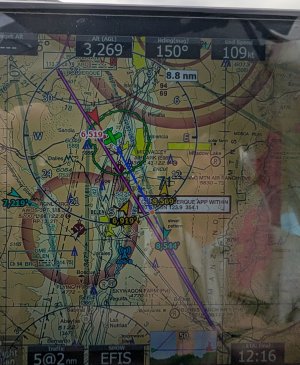
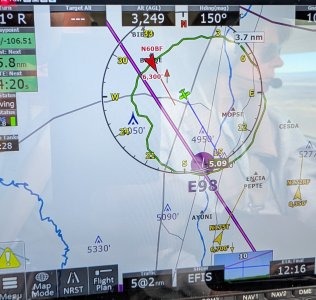
Out for a flight today with my stock Android 14 tab running Beta 14.017 - and my old but still works great Android 8 tab, running stock iFly 12.2.34. Both tabs are connected via wifi to my Stratux. Both tabs have the same screen layout, and show the same in flight data (speed, AGL, etc).

However there is a disturbing difference in the absolute altitude displayed for targets between the 2 tabs. And I'm not sure which one to trust.

This is not the first time we've seen this but it's really starting to "bug" me.

Bug reports sent.


Android 14
1767571337188.jpeg


Android 8 tab

1767571359783.jpeg
 
Both tabs have the same screen layout, and show the same in flight data (speed, AGL, etc).

However there is a disturbing difference in the absolute altitude displayed for targets between the 2 tabs. And I'm not sure which one to trust.
Any chance one is using pressure altitude, and the other is using GPS altitude? Pressure altitude can differ significantly from GPS altitude for numerous reasons.

Check here: Menu > Setup > Units of Measure > Pressure Altitude Support

Alternately, could they both be using Pressure Altitude, but have different Altimeter Settings? (I think you need to add the Altimeter Setting instrument to your display to check that.)

I don't actually remember how iFly uses Pressure Altitude Support. I *think* if pressure altitude support is enabled, then it defaults/prefers to use pressure altitude for traffic target altitude displays.
 
Cobra, Damn you're good. The Android 14 tab was not using Pressure Altitude support, the older Android 8 tab was.

They both have an Alt Setting instrument - and I can't say for sure they were reporting or showing the same altitude setting.

SO - assuming which is more "accurate"? Tab showing Pressure support altitude? My gut tells me yes, as the targets we see on the older PSA tab show altitudes that make sense 8500 or 9500 vs 8300 or 9300'.

Many thanks!
 
I'm not really sure which is more accurate. If your Stratux sensor is calibrated well, then if you keep the altimeter settings consistent between your tablets and your pressure altimeter in the panel, then pressure altitude may be the more consistent measurement to use, since that's what ATC and other pilots will be referencing.

You probably want to make sure both tablets are using a consistent altimeter setting. Tap on the instrument, and you'll see the options. I think it defaults to "Nearest" (read: "Nearest METAR"). That's reasonable for situational awareness, but just be aware that ATC may be using a different setting, so if you're talking to them your panel may be using a different setting than the tabs. If you want to micromanage it, you can select "Manual Setting" for that instrument, and then manually update your tablets every time you update your panel altimeter setting...but that's extra hassle.
 
Last edited:
I consider GPS altitude to be an estimate due to GPS drift. Your screenshots show a 20 ft difference between the two devices. Were you able to set both tablets to the same thing Cobra described and if so, do they show identical numbers afterward?
 
Actually the difference was 219'. I have changed the newer Android 14 tab to use pressure support, but haven't flown with it to confirm that it now shows the same target altitude.

When we were flying, I checked the Stratux properties - the pressure altitude as seen on the Stratux dashboard was within 20' of the pressure altitude displayed on my xponder so I think the Stratux has the correct data to share with the iFly software.
 
Actually the difference was 219'. I have changed the newer Android 14 tab to use pressure support, but haven't flown with it to confirm that it now shows the same target altitude.

When we were flying, I checked the Stratux properties - the pressure altitude as seen on the Stratux dashboard was within 20' of the pressure altitude displayed on my xponder so I think the Stratux has the correct data to share with the iFly software.
Oh I see now... you are talking about the difference in displayed altitude of the traffic near you. I was looking at the "ALT (AGL)" at the top of the screens in each screenshot. I'm sure the traffic displayed altitude data is from the ADS-B data stream associated with the target. I'd be interested to understand what the actual data stream data for altitude for that target is and then what iFlyEFB does with it prior to displaying it to you. I don't understand how the actual hardware device would matter when displaying both your own altitude and the altitude of a traffic target received via an ADS-B data stream.
 
Oh I see now... you are talking about the difference in displayed altitude of the traffic near you. I was looking at the "ALT (AGL)" at the top of the screens in each screenshot. I'm sure the traffic displayed altitude data is from the ADS-B data stream associated with the target. I'd be interested to understand what the actual data stream data for altitude for that target is and then what iFlyEFB does with it prior to displaying it to you. I don't understand how the actual hardware device would matter when displaying both your own altitude and the altitude of a traffic target received via an ADS-B data stream.
The ADSB data stream includes both (uncorrected) pressure altitude and GPS position, which includes altitude. The "Use Pressure Altitude" selection in iFly likely affects which altitude is plucked from the ADSB traffic data and used to display target altitude (or relative altitude).
 
Back
Top